Local Angle
Clarksville Hard Water & Your Washing Machine
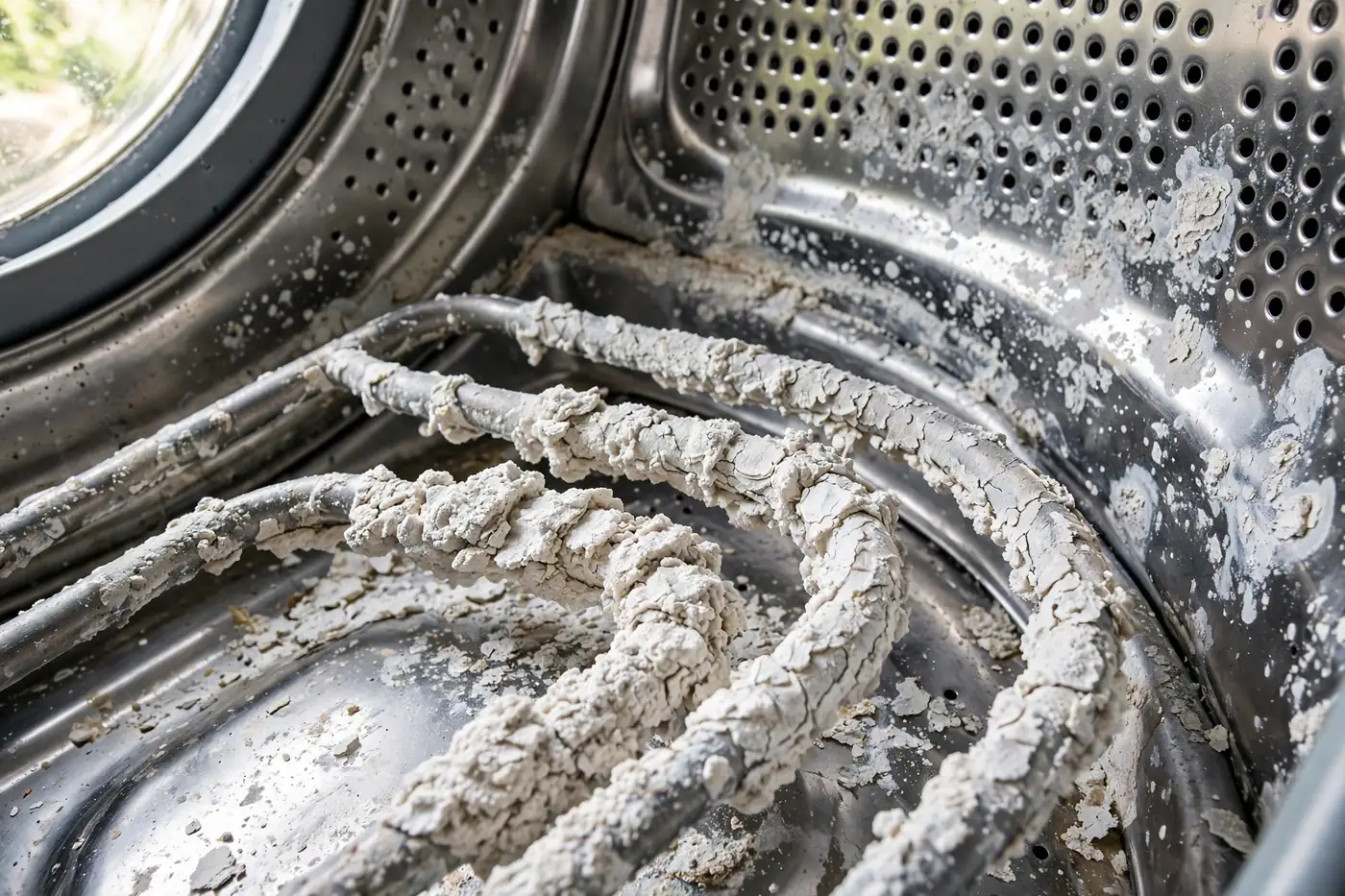
Clarksville’s city water, drawn from the Cumberland River, runs about 97 mg/L, roughly 6 grains per gallon, which the USGS scale calls moderately hard. (The city’s official water quality report confirms the water meets or exceeds federal and state standards but doesn’t publish a hardness figure; the 6-gpg number comes from third-party aggregations of city data.) Moderately hard isn’t brutal, but it’s enough mineral to scale up heating elements, clog dispenser drawers, and dull your laundry over time. A few habits keep it from costing you a machine.
What “moderately hard” actually means for your washer
Hardness is dissolved calcium and magnesium. In a washer, those minerals do a few predictable things:
- Scale on heating elements. Mineral crust insulates the element, so the machine works longer to heat the water and the element runs hotter than it should.
- Clogged inlet valves and dispenser drawers. Deposits narrow the valve screens and gum up detergent and softener compartments, which slows filling and leaves product sitting in the drawer.
- Soap scum on seals and tub. Minerals react with detergent to form scum, which builds up on gaskets and in the outer tub and feeds mildew smells.
- Detergent overuse. In mineral-heavy water, soap doesn’t lather as well, so people add more detergent than they should, which leaves residue on clothes and in the machine.
None of this kills a machine in a year. It’s a slow grind, which is exactly why it’s easy to ignore until something actually breaks.
The signs your water is winning
| What you notice | What it suggests |
|---|---|
| Whites and light colors look dingy | Mineral deposits building up in fabric fibers |
| Musty or sour smell from the tub | Residue and scum feeding mildew in the outer tub |
| Detergent or softener sitting in the drawer | Dispenser clogging from mineral deposits |
| Washer taking longer to fill | Inlet valve screens narrowing with scale |
| Crusty white buildup on the door glass or drum | Visible limescale; the inside has more |
If you’re seeing several of these at once, run a descaling cycle and check your detergent dosing before assuming the machine is failing.
Practical habits that help
- Dose detergent for moderately hard water. Follow your detergent’s dosing guide rather than eyeballing it. Too little leaves clothes dingy; too much leaves residue that feeds mildew and clogs dispensers. High-efficiency machines need HE detergent, no exceptions.
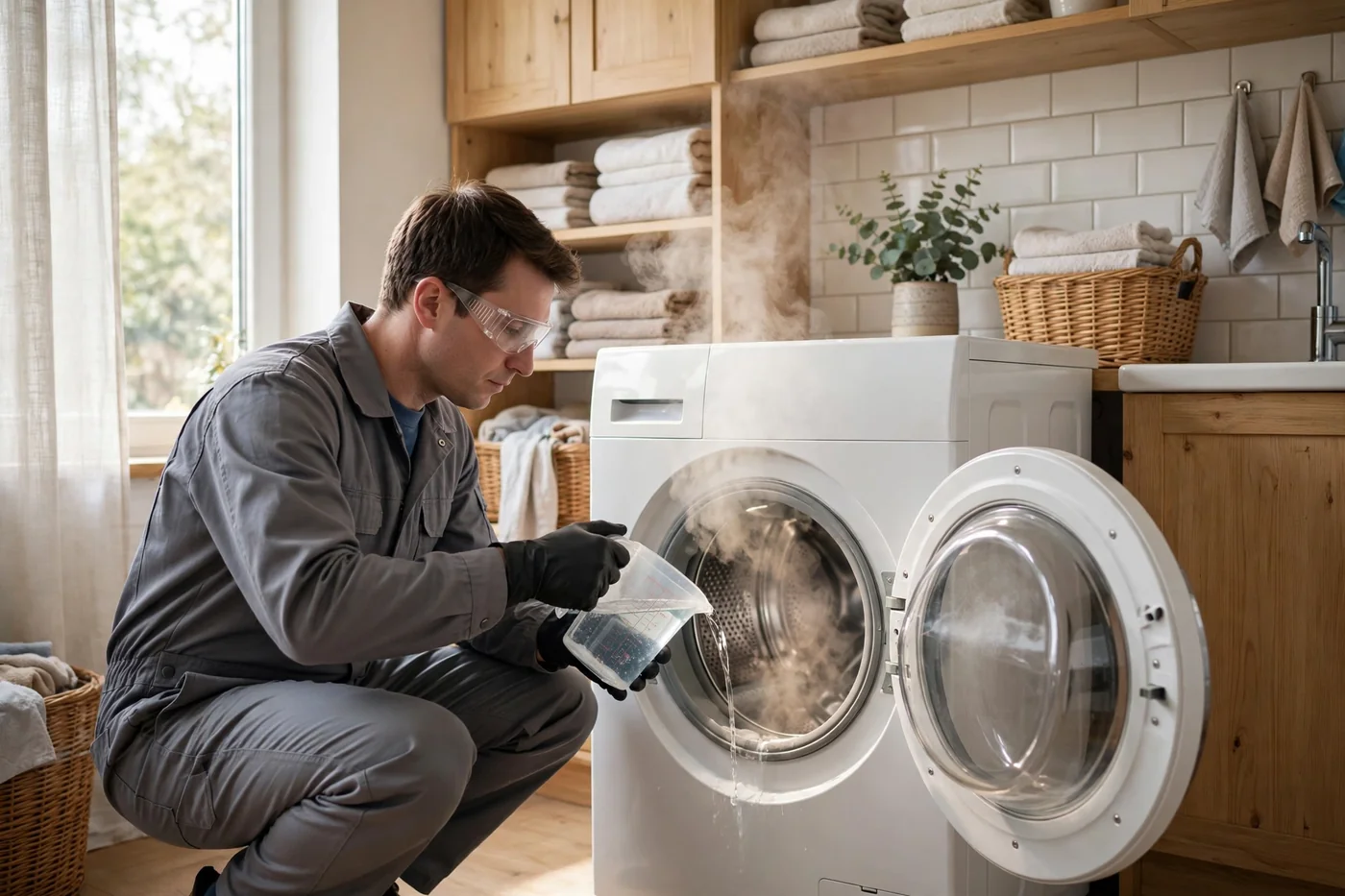
- Run a descaling cycle every one to three months. Use the machine’s cleaning cycle, or a hot empty cycle, with a washer descaler or cleaning product. Wipe the dispenser drawer and door gasket afterward.
- Don’t default to cold for everything. Cold-water washing is fine for most loads, but an occasional warm or hot cycle helps dissolve residue that cold water leaves behind.
- Leave the door ajar between loads. Moisture plus residue equals mildew. Air circulation is free and it works.
Well water in the county: get it tested
Homes on private wells in rural-edge areas of Montgomery County, Woodlawn and similar, may have harder water than city customers, because the region’s limestone geology tends to add minerals to groundwater. There’s no published local figure for private-well hardness, so don’t assume. Get your water tested (local testing is inexpensive), and if the numbers come back high, ask us what they mean for your washer. A machine on hard well water deserves more frequent descaling, and in some cases the fix is at the water source, not the washer.
And a note on timing: in fall 2025, Clarksville’s water utility reported taste-and-odor complaints from warm, dry weather and algae blooms in the Cumberland River. The water stayed safe throughout. That episode was about taste, not hardness, but it’s a useful reminder that river water changes with the seasons, and your washer feels those changes too.
Related reading
- Washer repair in Clarksville, TN · same-day diagnosis when habits aren’t enough
- Washer and dryer maintenance in Clarksville · descaling as part of a yearly tune-up
- How often should you service your washer and dryer? · the full maintenance cadence
Does Clarksville TN have hard water?
Available third-party data puts Clarksville city water at about 97 mg/L, roughly 6 grains per gallon, which the USGS scale classifies as moderately hard. The city's official annual water quality report confirms the water meets or exceeds federal and state standards, but it doesn't publish a hardness figure.
Can moderately hard water damage a washing machine?
Over time, yes, it can contribute to problems. Mineral deposits build up on heating elements and in water inlet valves and dispenser drawers, which can slow heating, clog dispensing, and shorten part life. Regular descaling cycles and correct detergent dosing keep buildup from becoming a repair.
Should I use more detergent if my water is moderately hard?
Follow your detergent's dosing guide for moderately hard water rather than guessing. Too little leaves clothes dingy; too much leaves residue that feeds mildew and clogs dispensers. If you have a high-efficiency machine, use HE detergent only.
How do I descale my washing machine?
Run the machine's cleaning cycle, or a hot empty cycle, with a washer descaler or washer-cleaning product every one to three months. Wipe down the dispenser drawer and door gasket afterward. If heavy scale is already clogging the dispenser or inlet screens, a technician can clear what a cleaning cycle can't.
Is well water in Montgomery County harder than city water?
Homes on private wells in rural-edge areas of Montgomery County may have harder water, because the region's limestone geology tends to add minerals to groundwater, but there's no published local figure for private wells. If you're on a well, get your water tested before assuming anything, and ask us what the results mean for your washer.