Maintenance Cadence
How Often Should You Service Your Washer and Dryer?

I plan my own machines the way I plan around Clarksville weather: in quarters. Spring pollen, humid summers, fall leaves finding the outside hood, and a January freeze that can crack a line in an unheated garage. Here is the 15-minute routine I actually follow, quarter by quarter, plus how to read the signs when your machines start asking for attention.
Quarter one, January to March: shake off winter
Winter is the season that punishes laundry rooms. Clarksville’s freezing-rain spells and cold snaps are rough on any washer sitting in an unheated garage or exterior closet, so start the year there. Run your eyes along both supply lines and feel for stiffness or swelling where they connect. Run the washer’s tub-clean cycle (or a hot empty cycle with a washer cleaner), because months of cold-water washing leave detergent and body oils sitting in the tub, and that buildup feeds that musty smell once the warm weather arrives.
While you are at it, rock the washer at each corner. Machines settle over winter, and one that wobbles now will be banging by spring. This is the same walkthrough we suggest to customers from downtown Clarksville to the county line, and it takes about fifteen minutes.
Quarter two, April to June: the humidity ramps up
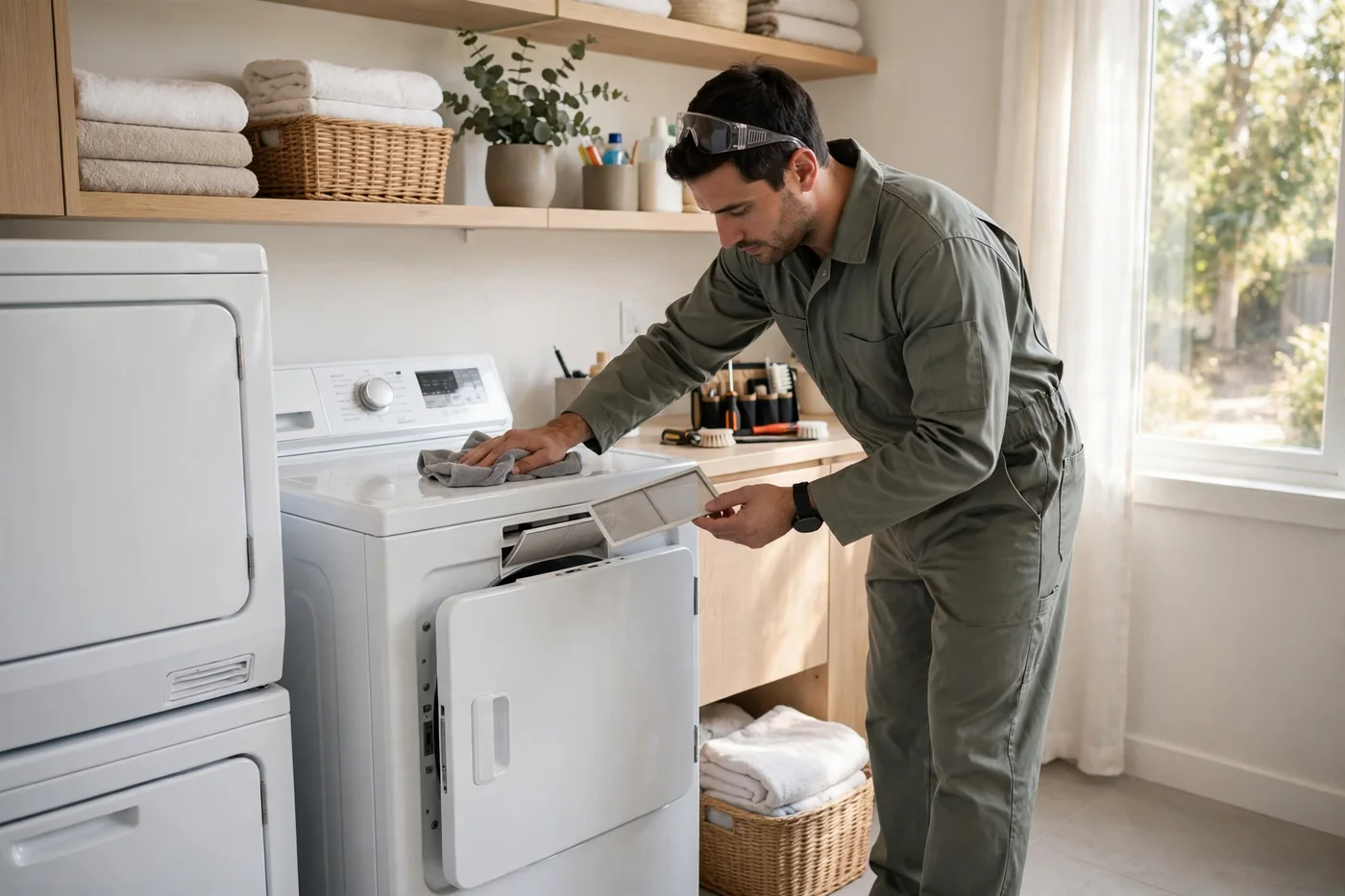
As the humidity climbs toward summer, the front-load door seal becomes the thing to watch. Give it a quick wipe after your last load of the week, folding the seal back to catch what hides in the creases, and leave the door ajar between loads so the tub can dry. Wash the dryer screen with warm soapy water this quarter: dryer-sheet film builds an invisible layer that blocks air even when the screen looks clean.
Spring is also when the Cumberland River bottoms stay damp and laundry rooms hold moisture, so glance behind both machines with a flashlight and look for any damp spots on the floor or lines. A drip you catch in April is a quick fix. The same drip in August is a repair call.
Quarter three, July to September: the dryer works hardest
Peak humidity is when your dryer earns its keep, and when it starts complaining if the exhaust path is choked. Step outside while the dryer runs and check the outside hood: the flap should swing wide with strong, warm air. If leaves, fuzz, or a bird nest are blocking it, clear them out. Inside, vacuum the trap slot with a crevice tool, because fine fuzz sails past the screen on every single load.
Watch your dry times this quarter. If a load that used to finish in one cycle now needs two, that is your machine asking for help, not a quirk to live with. A check now beats a breakdown during the holidays.
Quarter four, October to December: get ready for the freeze
Before the first hard freeze, this is the quarter to think about water. If your washer lives in an unheated space, check that lines are insulated and the garage door closes tight on the coldest nights. This is also the right time to have the full exhaust path cleaned by a pro, so holiday laundry and visiting family do not push an already-loaded system over the edge.
And check the calendar on your supply lines. Standard lines age out around five years, and the steel-braided kind is not immortal either. If you cannot remember when yours went in, this is the quarter to replace them.
Renters and owners: whose chore is this?
If you rent, especially in the Fort Campbell rental corridor where machines often come with the lease, the quarterly habits are still yours: lint trap every load, seal wipe, door ajar, and reporting a damp spot or a strange noise the week it starts, not the month after. Do not open panels or touch lines and hookups; that belongs to the property manager, and a quick message with a photo usually gets it handled.
If you own the machines, the lines, the exhaust path, and the annual pro visit are on you. Owners who stay on the quarterly routine almost never meet us on an emergency call, which is exactly the point.
How your machines ask for attention
Machines telegraph trouble well before they quit. Learn the four signals and you will rarely be surprised:
- Drying takes longer than it used to. Gradually longer dry times almost always mean restricted air, not a dying dryer.
- The washer walks, bangs, or squeals. Something shifted or wore down. Early, it is a quick adjustment. Late, it is a rebuild.
- A musty smell clings to the seal or the tub. Mildew has a foothold. Wipe, ventilate, and run a tub-clean cycle.
- Dampness appears behind or under a machine. Any moisture where the lines connect is telling you its time is short.
When the signs point past the quarterly routine, that is what a pro maintenance visit is for: a technician spends real time with both machines and tells you honestly what is fine, what needs attention soon, and what can wait.
Related reading
- Washer and dryer maintenance in Clarksville, TN · what a pro visit covers
- Washer repair service in Clarksville · when maintenance turns into a repair
- How to clean your dryer vent safely · the annual vent job, DIY and pro versions
Do washers and dryers really need yearly maintenance?
They benefit from it, especially the dryer. A yearly tune-up catches worn hoses before they burst, checks vent airflow before it becomes a fire risk, and re-levels the washer before vibration wears out the suspension. Most of the expensive failures we repair started as small problems a tune-up would have caught.
How often should washer supply hoses be replaced?
Most manufacturers suggest replacing rubber supply hoses about every five years, because rubber hardens and cracks with age. Braided stainless-steel hoses last longer but aren't immortal. If your hoses are bulging, cracked, or you can't remember how old they are, replace them now.
What does a washer and dryer tune-up include?
A professional tune-up typically covers inspecting and tightening water supply hoses and connections, checking the washer's leveling and suspension, cleaning the pump filter, vacuuming the dryer lint system, measuring vent airflow, and checking belts, seals, and drain hoses for wear. Anything worn gets reported to you with an upfront quote before we touch it.
How often should I run a washer cleaning cycle?
Run the machine's cleaning cycle (or a hot empty cycle with a washer cleaner) about once a month, more often if you mostly wash in cold water. Cold-water washing doesn't melt away detergent residue and body oils, which build up in the tub and feed mildew, especially in humid climates like Clarksville's.
Can I skip maintenance if my machines are new?
New machines still need the basics: lint trap every load, hose checks, and vent cleaning on schedule. The one new-machine task people forget is re-checking the leveling after the first month, since machines settle. Skip maintenance and you shorten the machine's life; it just takes longer to show.