DIY How-To
How to Clean Your Dryer Vent Safely (DIY + When to Call)
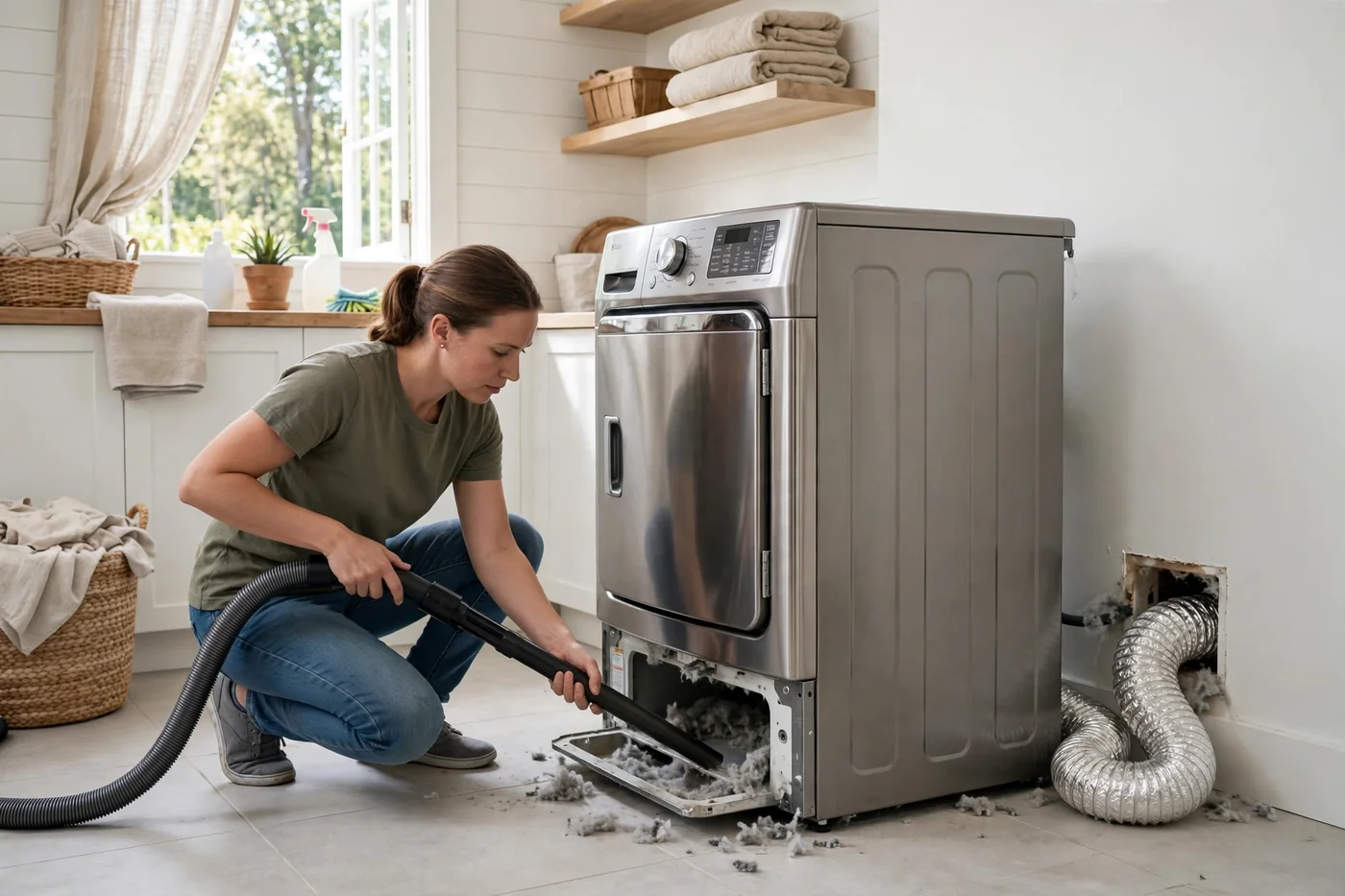
Give me 20 minutes, a vacuum with a crevice tool, and a cheap brush kit, and you can handle the parts of this job that are genuinely yours. The long hidden stretches and anything up on the roof belong to a pro. This is the walkthrough I would give a neighbor: what to do, in what order, and exactly where to stop.
Before you start: grab this, leave that alone
Round up a vacuum with a crevice tool, a kit with flexible rods (sold at any hardware store), a flashlight, and an old towel. Unplug an electric dryer before you pull it anywhere. If you have a gas dryer, do not touch the gas line at all; just ease the machine forward a few inches. And if the connection behind the machine looks squashed, disconnected, or damaged in any way, stop right there. That is not a DIY moment.
The lint trap deep-clean
Pull the screen out and peel off the lint like always. Then, once in a while, give the screen a real wash with warm soapy water and let it dry fully. Dryer sheets leave an invisible film that blocks air even when the screen looks spotless. Here is the test: hold the screen under the faucet. If water beads up instead of passing through, the film is there and the screen needed that wash.
The trap is a screen, not a filter, so the fine stuff sails past it on every load no matter how faithful you are. That is why the next two stops matter.
The short stretch you can reach
With the trap out, push the crevice tool down into the slot and vacuum out everything hiding below. You will be surprised what comes up. Then pull the dryer a few inches from the wall and shine the flashlight at the short connector behind the machine. If it is squashed flat or folded over, you have likely found your problem, and straightening it may be the whole fix.
Feed the rods into the opening and work them back and forth, adding rods until you reach the far end or cannot comfortably reach further. Pull the fuzz out toward you rather than packing it deeper. Go only as far as you can comfortably manage; past that point is pro territory.
Step outside: the damper check
Walk around to where it exits. Open the damper and pull out any leaves, fuzz, or the occasional bird nest. In Clarksville’s older neighborhoods and out toward Woodlawn, birds love these covers in spring. The damper flap should swing freely when the dryer runs and close again when it stops. If it is painted shut, flattened by landscaping, or missing entirely, add that to the list for a pro visit.
Now run a regular load and check your work: you should feel strong, warm air coming out of it, and clothes should come out dry in one cycle.
What I found the first time I did this
The first time I gave my own machine the full 20 minutes, the rods came back gray and the air pushing out felt twice as strong. The next load dried in one cycle for the first time in months. I do this work for a living and I still put it off for a year. Put yours on the calendar before you forget what a strong blow feels like.
Make it a habit: tie it to something you won’t forget
The number-one reason these go years without attention is not laziness; it is that nobody puts it on a calendar. Mine happens the Saturday after Thanksgiving. Guests are arriving, the dryer is about to run nonstop through the holidays, and the weather is still decent for a walk around the yard. Pick your own anchor: the first weekend of spring, the day you test the smoke alarms, whatever you will actually remember. Future you, the one with dry clothes and a clear conscience, says thanks.
When to stop and call us
Stop and call us at (931) 208-9792 when any of these are true: dry times did not improve after your 20 minutes, which means the clog is deeper than you can reach; it exits through the roof, which needs ladder and roof work; the path turns through walls or a crawlspace you cannot see through; the cap is damaged or missing; or it has been years since anyone cleaned it and the buildup is clearly heavy.
A dryer vent cleaning in Clarksville picks up exactly where this guide stops: full pass through the entire path, the flow checked before and after, and an honest read on whether your setup is fine or needs work. We do this work from Sango to St. Bethlehem, and we will tell you straight which one you have.
Why this 20 minutes matters
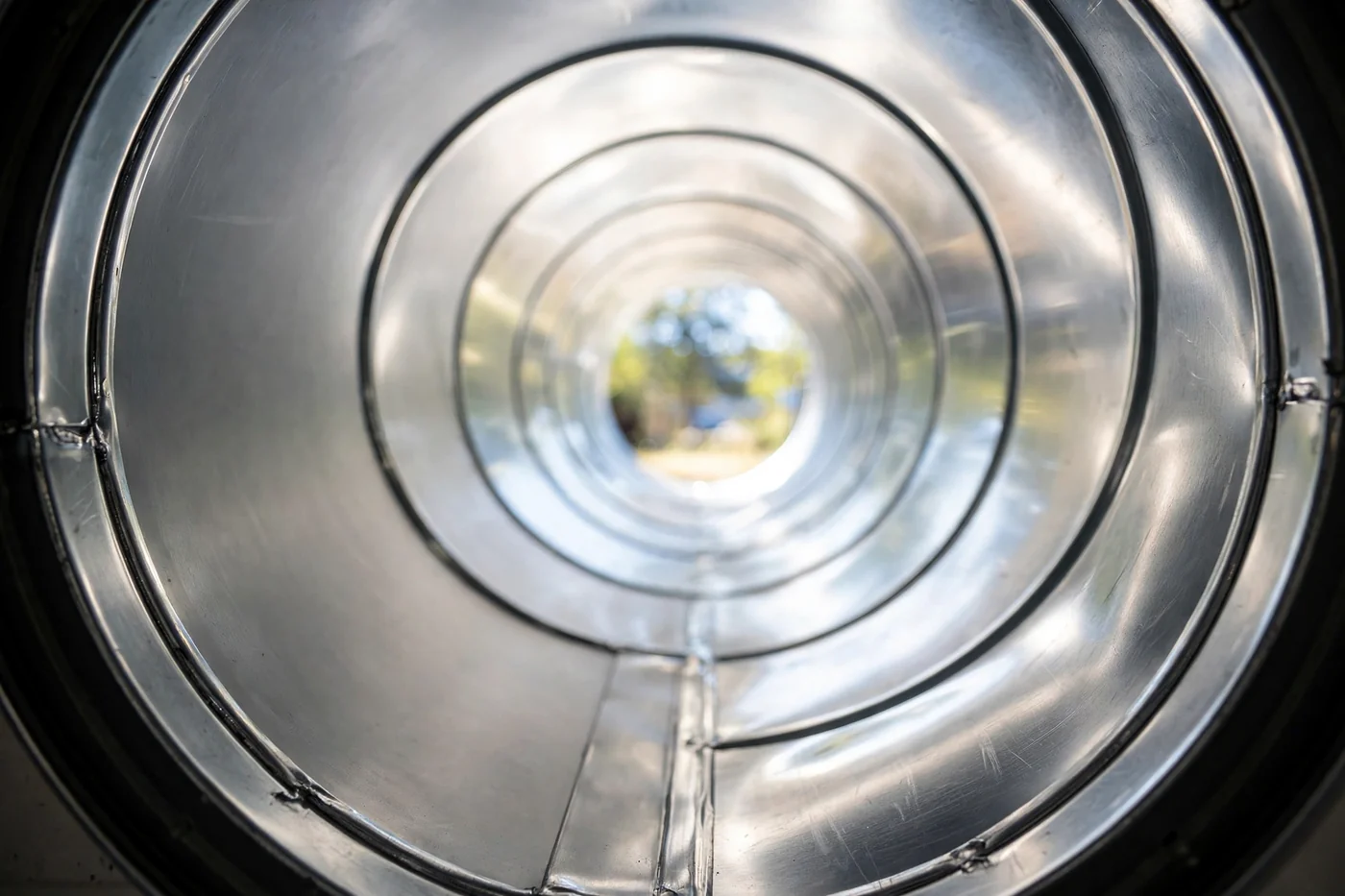
Lint catches fire easily, and a clogged exhaust lets heat build up right where the lint collects. The national numbers are worth a minute. The NFPA counts about 15,970 home fires a year involving a clothes dryer or washing machine across the country, with roughly 92 percent of them involving dryers. Lint was the first thing to catch in about 27 percent of dryer fires, and roughly one-third trace back to a failure to clean. The NFPA’s advice is plain: clean it out once a year, or more often if dry times get longer. (All figures above are national, not Clarksville-specific.)
There is a comfort payoff too, especially in Tennessee’s humid summers: when moist air cannot get out, it dumps back into your laundry room, which turns sticky and feeds mildew. Do that and the room stays drier.
Related reading
- Dryer vent cleaning in Clarksville, TN · what our professional service includes
- Why your dryer takes forever to dry · the vent is the usual suspect
- Washer and dryer repair in St. Bethlehem · we clean vents across the county
How often should I clean my dryer vent?
Clean the lint trap after every load, and the full vent path at least once a year. The NFPA's national guidance is to clean lint out of the vent pipe once a year, or more often if your drying time gets longer than normal. Households that run the dryer daily should clean more often.
Can I clean my dryer vent myself?
Yes, for the accessible parts. Clean the lint trap every load, vacuum the trap housing a few times a year, and you can clear a short duct run you can fully see through with a vent brush kit. Long duct runs, roof vents, and ducts that turn through walls or the attic should go to a professional.
Should I disconnect the dryer to clean the vent?
For a basic cleaning, pulling the dryer a few inches from the wall to inspect the transition duct behind it is enough; unplug an electric dryer first. Never disconnect a gas dryer from its gas line. If the connection behind the machine looks crushed or damaged, leave it alone and call a pro.
Is foil or plastic vent duct safe?
No, not ideal. Flexible foil and white plastic accordion ducts crush easily, trap lint in their ridges, and are a fire risk. Rigid metal duct is the standard for safety. If your dryer uses foil or plastic duct, have a professional replace it with rigid metal during your next vent service.
How do I know my dryer vent cleaning worked?
Run a normal load and check two things: strong, warm airflow at the outside vent hood, and clothes coming out dry in a single normal cycle. If drying time doesn't improve after a DIY cleaning, the clog is deeper in the duct run, which is the point where a professional cleaning earns its keep.