Dryer Troubleshooting
Why Your Dryer Takes Forever to Dry
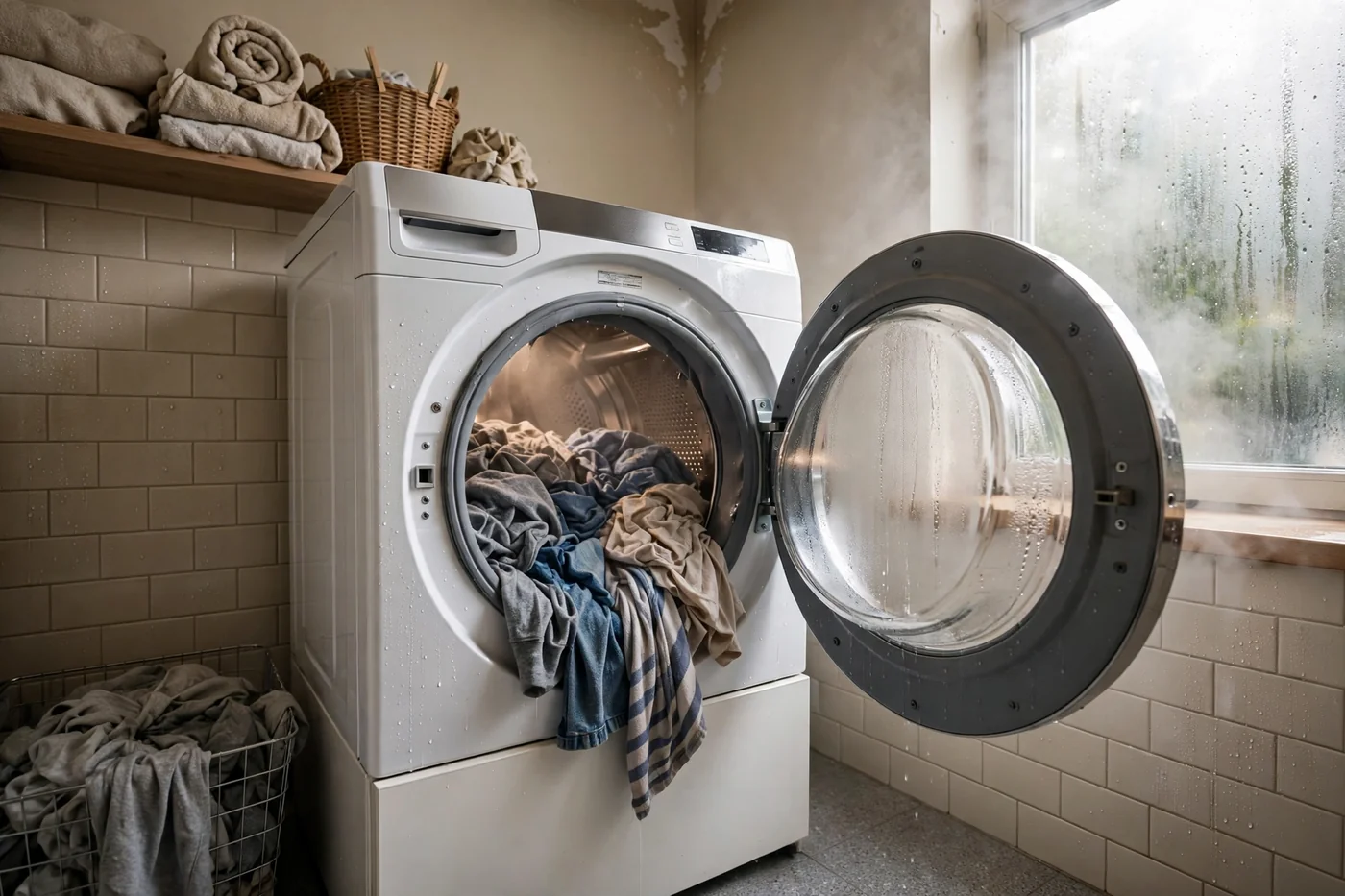
Before you blame the machine, blame the load. Most slow dryers I see are fighting the laundry, not a broken part: a drum packed tight, towels and t-shirts tumbling together, or clothes that came out of the washer still dripping. Fix the habits below first. They cost nothing, and they solve more “takes forever” complaints than any repair we do.
The two-thirds rule
A dryer dries by moving hot air between the garments. Pack the drum full and that air has nowhere to go; the outside of the load dries while the middle stays damp, so you run it again. Aim for about two-thirds full. Big households, the Fort Campbell families and Sango subdivisions doing back-to-back loads all weekend, feel this one most: splitting one giant load into two normal ones usually finishes faster than running the giant one twice.
Sort by weight, not by color
Towels and jeans hold water like sponges; t-shirts and sheets do not. Tumble them together and the light stuff overdrys while the heavy stuff stays wet, and the cycle runs long trying to please both. Sort heavy and light into separate loads. Your dryer will thank you, and so will your electric bill.
Blame the washer first
Here is the one people miss: if clothes come out of the washer dripping, no dryer can fix that in one cycle. A washer that did not spin well hands the dryer extra gallons to remove. If your loads are consistently sopping, the real problem is on the wash side. Run the checks in our washer not spinning guide, or read what to check before you call if water is sitting in the tub.
Sensor dry beats timed dry
If your dryer offers sensor dry, use it. It stops when the clothes are actually dry. Timed dry just runs the clock: it can quit while thick waistbands are still damp, or keep tumbling dry clothes and waste your afternoon. Switching to sensor dry is the easiest free win on this page.
The 60-second outside check
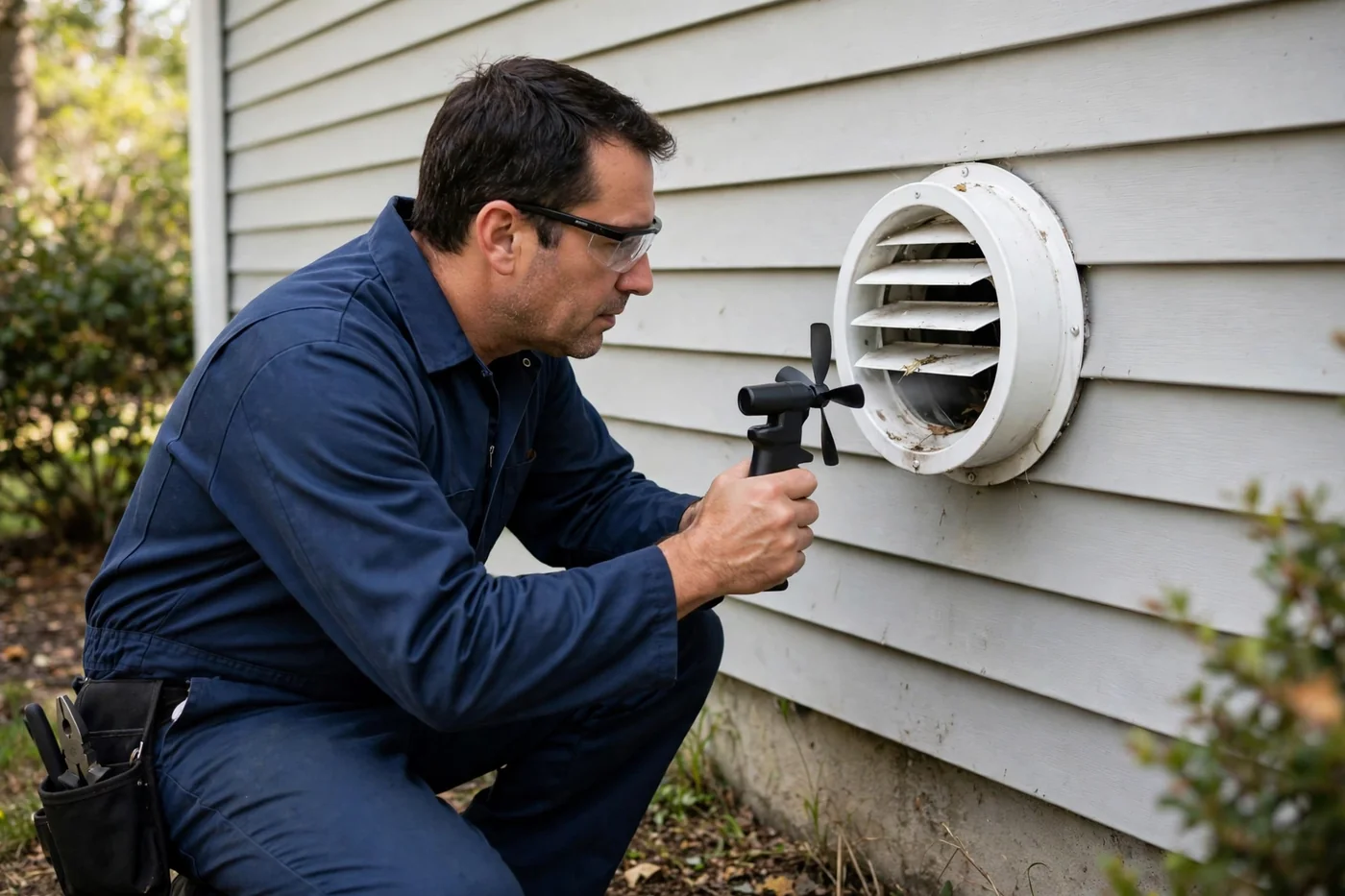
Loads sensible and it still takes forever? Step outside while the dryer runs on a medium cycle and hold your hand near the outside cap. You should feel strong, warm air pushing out. Weak or cool flow means something is choking the path between the dryer and the wall, and that is a different job: our 20-minute vent safety check covers what you can do yourself and where to stop.
When it really is the machine
If the loads are right, the washer spins fine, and the outside check feels strong, the trouble is inside the machine: the heat parts or a clog deeper than you can reach. That is what our dryer not heating checklist is for, and what a professional vent cleaning resolves when the clog is the story. One firm rule: anything involving a gas dryer’s fuel parts belongs to a technician. Call us at (931) 208-9792 rather than guessing.
When slow drying is a safety issue
A dryer that suddenly takes much longer than it used to is waving a flag. National data from the NFPA (National Fire Protection Association) counts about 15,970 home fires a year involving a clothes dryer or washing machine, with roughly 92 percent of them involving dryers. Lint was the first item ignited in about 27 percent of dryer fires, and roughly one-third were caused by failure to clean. The NFPA’s guidance: clean the lint out of the vent pipe once a year, or more often if drying takes longer than normal. Treat slow drying as a maintenance warning, not just an annoyance.
Related reading
- Dryer not heating? The full diagnostic checklist
- Dryer vent cleaning in Clarksville, TN · what a professional cleaning includes
- How to clean your dryer vent safely · the DIY version with clear limits
Why does my dryer need two cycles to dry clothes?
A dryer that needs two cycles is almost never heating properly or breathing properly. The most common cause is a lint-clogged vent restricting airflow, followed by a failing heating element, a tripped thermal fuse, or chronic overloading. Check the lint trap and the outside vent for strong airflow first.
How can I tell if my dryer vent is clogged?
Run the dryer on a heat cycle and hold your hand (or a tissue) at the outside vent hood: you should feel strong, warm airflow. Weak or cool airflow, a laundry room that feels humid while the dryer runs, and clothes that stay damp after a full cycle all point to a restricted vent.
Can overloading the dryer make it take longer?
Yes. A packed drum blocks hot air from circulating between garments, so the outer clothes dry while the middle stays damp. Dryer drums should be about two-thirds full. Also avoid drying very heavy items like bath towels in the same load as light shirts.
Why does my dryer get hot but the clothes stay damp?
Heat with damp clothes usually means the hot, moist air can't escape: the classic sign of a clogged vent. The dryer is making heat, but the moisture is trapped in the drum with the clothes. Clean the lint trap, check the vent for airflow, and if the vent is clear, the cycling thermostat or moisture sensor may need a technician.
Is a slow dryer a fire hazard?
It can be. National NFPA data shows about 15,970 home fires a year involve a clothes dryer or washing machine, roughly 92 percent of them dryers, and about one-third are caused by failure to clean. If your dryer suddenly takes much longer than it used to, treat it as a warning sign and get the vent checked.