No-Heat Dryer Service · Clarksville, TN
Dryer Not Heating? Fast Fix in Clarksville, TN
Takes forever to dry or no heat at all? We diagnose in the right order: vent airflow first, then thermal fuse, thermostats, element, and controls. Most fixed in one visit.
Serving Clarksville & Montgomery County · Mon-Fri 7AM-7PM · Sat 8AM-4PM · 24/7 Emergency Line
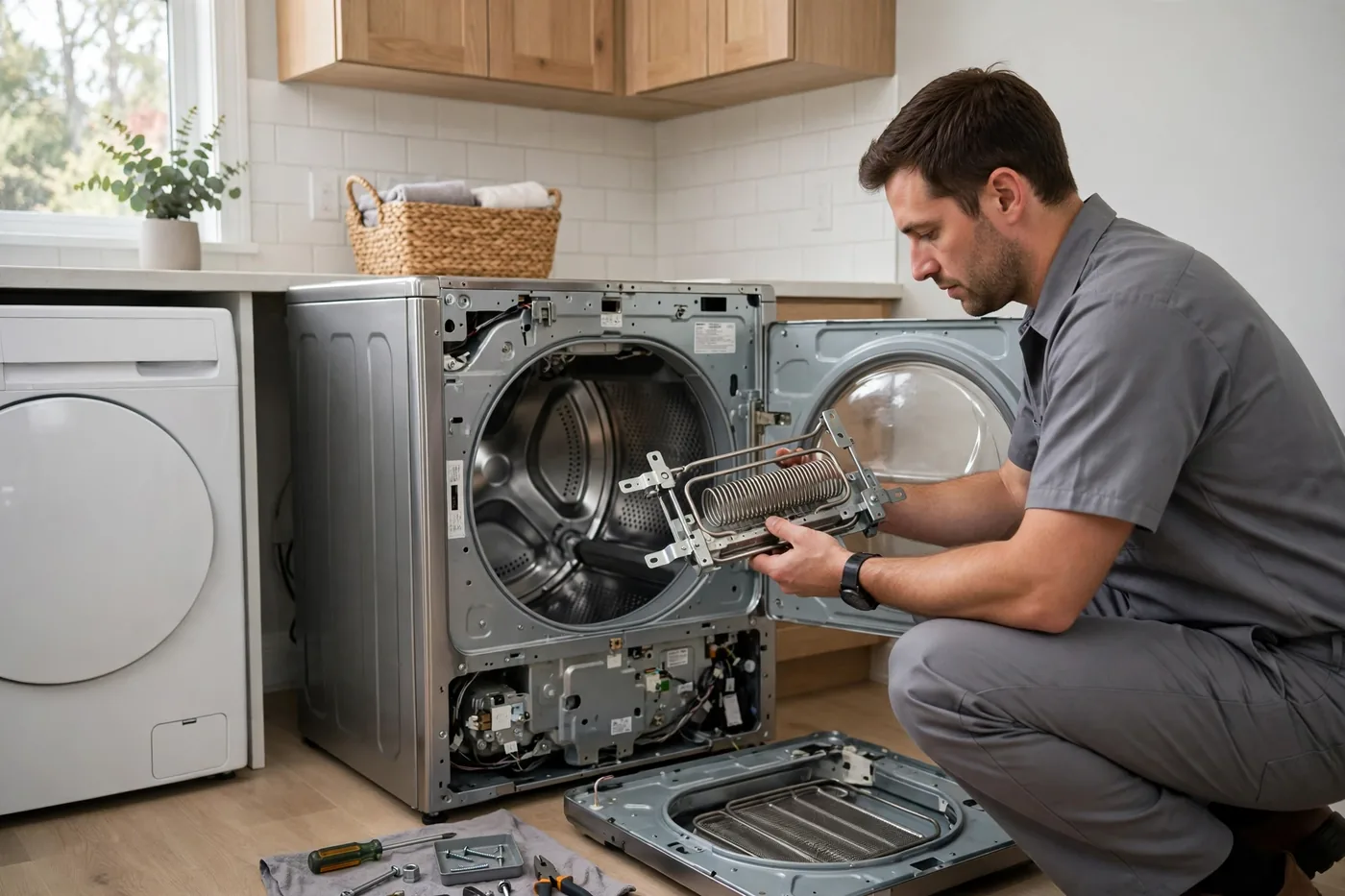
Clarksville No-Heat Dryer Repair
Two Cycles to Dry One Load? That's a Symptom.
Short answer: when a dryer runs but clothes stay damp, the causes go in a specific order: restricted vent airflow first (the most overlooked cause in the business), then the thermal fuse, then the cycling and high-limit thermostats, then the heating element or gas ignition parts, and finally the timer or control board. We work that list in order, because skipping ahead is how good elements get replaced for no reason.
Most "no heat" calls we run in Clarksville are actually "weak heat" calls. The dryer finishes its cycle and the clothes are warm-ish and still damp, so you run them again. That second cycle is your wallet talking: longer runtimes, more electricity or gas burned, and more wear on everything in the machine. If your dryer used to finish in 45 minutes and now needs two runs, the heat side is failing gradually, and gradually is the cheapest time to catch it.
The number-one overlooked cause deserves a moment, because homeowners almost never suspect it. A vent run packed with lint chokes airflow, and a dryer with no airflow can't push heat and moisture out of the drum. The result looks exactly like a dead element. Worse, the trapped heat overheats the cabinet and blows the thermal fuse, which then kills heat completely. So one clogged vent can produce the symptom, destroy a fuse, and convince you the dryer is shot. We check airflow first so none of that happens.
Our No-Heat Diagnostic Order
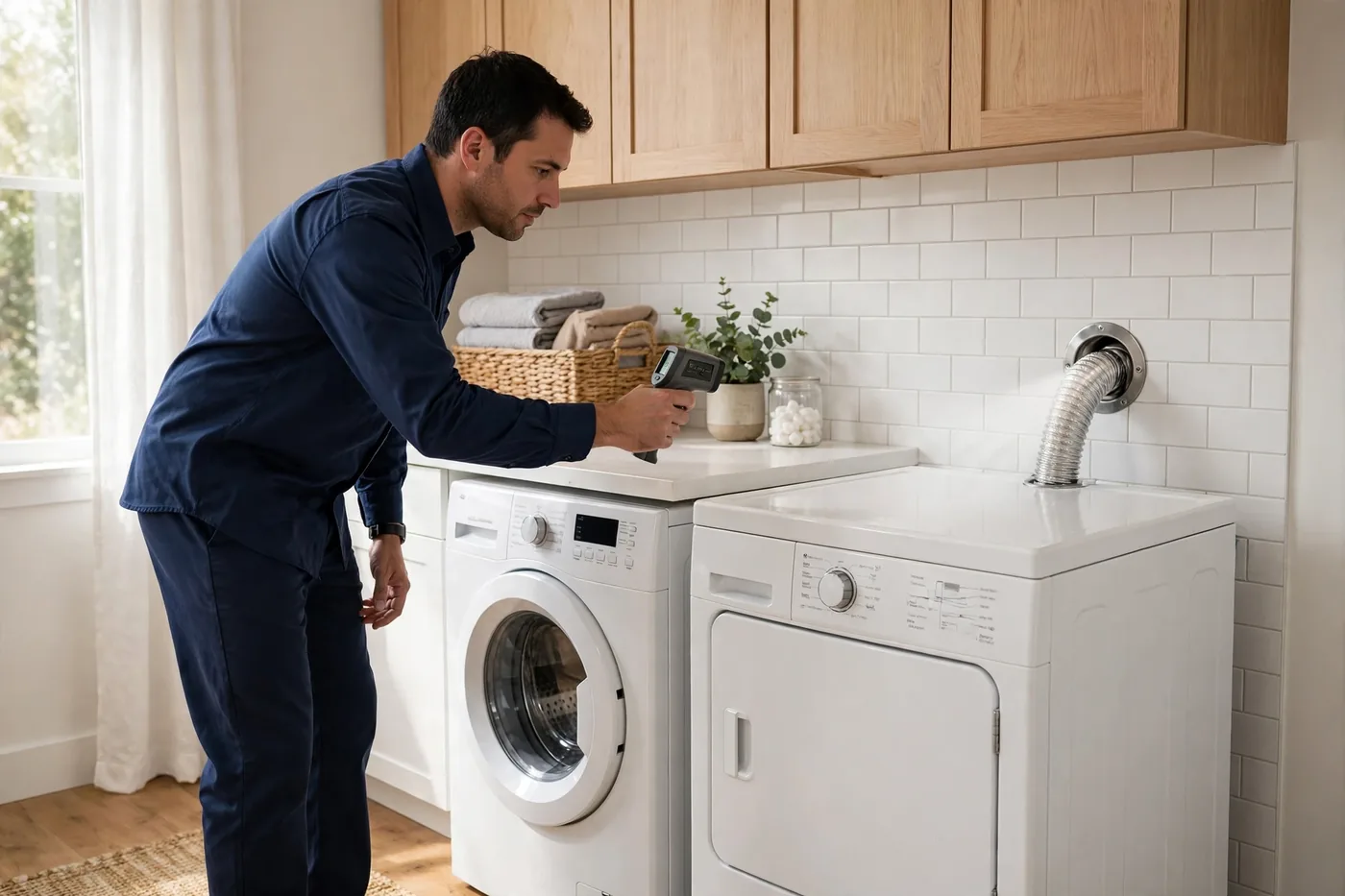
- Vent airflow measured at the outside cap (weak airflow = vent problem first)
- Lint trap housing and the duct behind the dryer inspected for packing
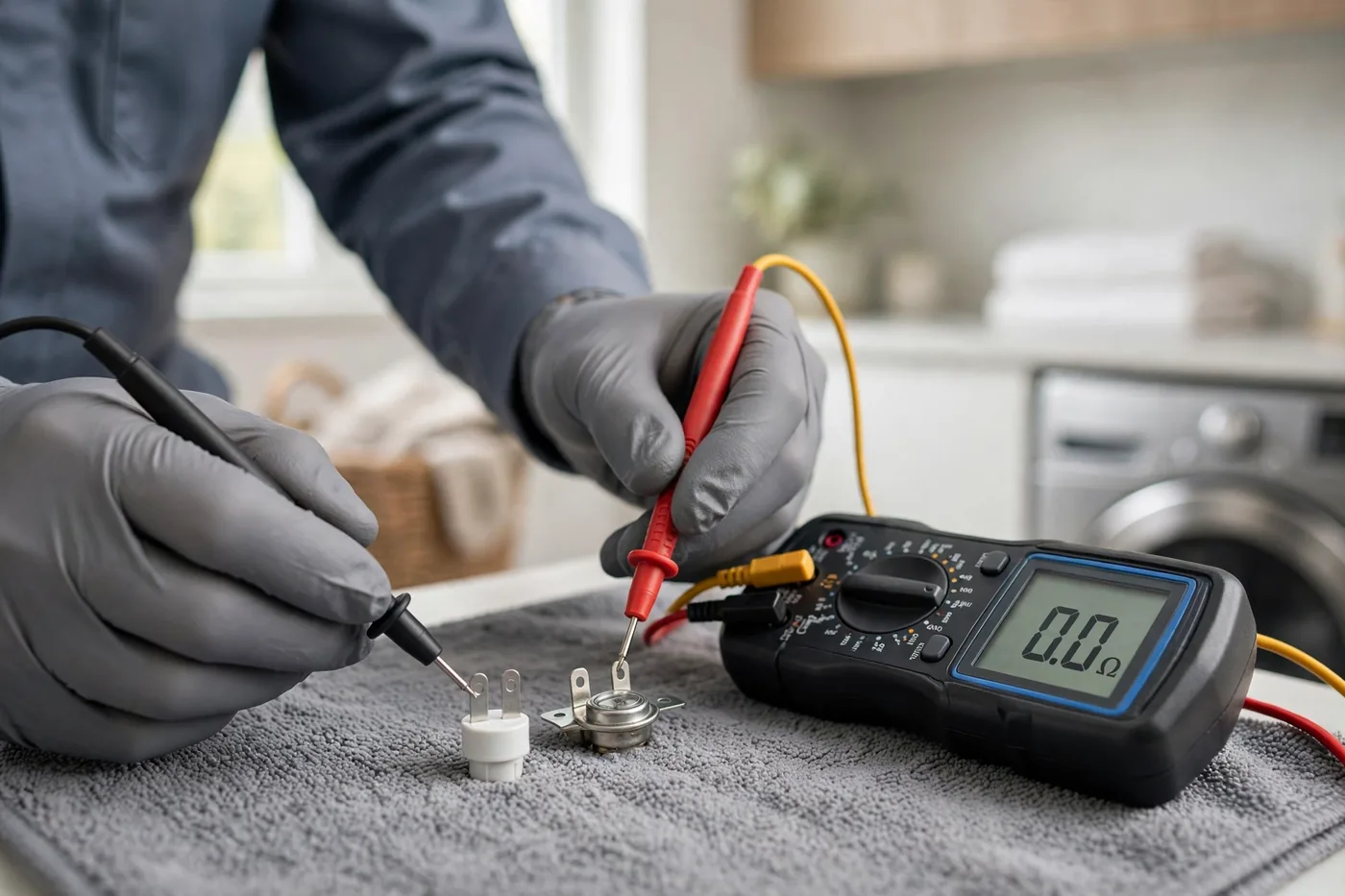
- Thermal fuse tested for continuity (and if blown, we hunt why)
- Cycling thermostat and high-limit thermostat tested
- Heating element (electric) or igniter, sensor, and valve coils (gas)
- Timer or control board verified with a voltage trace during a heat call
- Full heated test cycle to prove the fix holds through the whole load
A Clarksville-specific note: newer subdivisions in Sango and along the Rossview corridor often have longer vent runs routed through walls and attics. Those runs clog faster and are harder to check from the laundry room alone, which is why we measure airflow at the outside cap. If your home is a newer build and the dryer has always seemed sluggish, the vent run may have been marginal from day one. Tennessee's humid summers add to the story: when a clogged duct forces heat and moisture back into the house, laundry rooms go muggy and that moisture has nowhere good to go. The NFPA's research on dryer fires makes the same point from the safety side: failure to clean is the leading cause of dryer fires nationally.
We service no-heat problems on most major dryer makes, including Whirlpool, Maytag, GE, Samsung, LG, Kenmore, Frigidaire, Electrolux, and Amana. Independent shop, not an authorized dealer for any of them.
Don't Ignore These
How No-Heat Problems Show Up
Two cycles to get dry
The most common complaint we hear. Weak airflow or a fading element makes the dryer work twice as hard for half the result. This is the stage where a fix is usually small and cheap.
No heat at all
Drum turns, timer runs, clothes come out cold. This is typically the thermal fuse, the element, or gas ignition parts. Because the fuse often blows from bad airflow, we always check the vent alongside it.
Dryer stops mid-cycle
Overheating from restricted airflow can trip the thermal fuse and kill the dryer mid-load. If your dryer quits partway through and won't restart, airflow is suspect number one.
Upfront & Simple
How We Hunt Down a No-Heat Problem
Airflow first
We measure vent airflow at the outside cap. If the dryer can't breathe, nothing else gets tested until we know how bad the vent is.
Test the heat circuit
Thermal fuse, cycling thermostat, high-limit thermostat, then the element or gas ignition parts, each tested individually with a meter.
Find the why, not just the what
A blown fuse is a symptom too. We figure out what overheated the dryer so the new part doesn't die the same way.
Fix, prove, quote up front
Firm price before work, repair completed, then a full heated test cycle to confirm the fix holds.
Why Clarksville Calls Us
We Fix the Cause, Not Just the Part
Vent checked before parts
The most overlooked cause gets checked first on every no-heat call. You won't pay for an element when the vent was the problem.
We explain the why
When a fuse blew or an element failed, we tell you what caused it in plain language, so you can stop it from happening again.
Honest about replacement
If a 12-year-old dryer needs an element, a fuse, and a board, we'll tell you the repair isn't the smart money. That's our call to make honestly.
Honest Pricing
The Order We Diagnose No-Heat Dryers
This is the exact sequence your technician follows. The order matters: checking the vent first protects every part below it.
| Step | What we check | Why this step comes here |
|---|---|---|
| 1 | Vent airflow at the outside cap | Restricted airflow causes or mimics every failure below it |
| 2 | Lint trap housing and duct behind the dryer | Packing right at the machine chokes airflow fast |
| 3 | Thermal fuse continuity | A blown fuse kills heat; if blown, we find what overheated it |
| 4 | Cycling and high-limit thermostats | Bad regulation overheats or underheats the drum |
| 5 | Heating element or gas ignition parts | The actual heat source, tested after the protections |
| 6 | Timer or control board | Heat that never gets the signal to turn on |
On pricing: you get a firm quote after diagnosis, before work starts. Nationally, common dryer repairs are typically listed in the $100 to $300 range on repair-industry sites (heating elements often quoted $150 to $300), but that's a national reference, not your Clarksville price. The repair-or-replace question comes up a lot on no-heat calls, so we've written it up plainly in our washer and dryer cost guide. To read more about why dryers take so long, see our article on why your dryer takes forever to dry.
Across Clarksville & Montgomery County
No-Heat Dryer Repair Across Town
Sango
Southeast Clarksville's newer subdivisions, where longer vent runs through walls and attics are common. Slow-drying complaints here often turn out to be airflow, not parts.
Rossview
The I-24 Exit 8 growth corridor with new construction. Dryers here are young but already developing heat-circuit wear, and long vent runs get our airflow test first.
St. Bethlehem
Near Dunbar Cave State Park and the Cumberland River. River-area dampness plus Tennessee humidity makes clogged vents a comfort problem too: trapped moisture comes back into the laundry room.
Good To Know
Dryer Not Heating FAQs
Why is my dryer running but not getting hot?
The usual suspects, in order: restricted vent airflow (the most overlooked cause), a blown thermal fuse, a failed cycling or high-limit thermostat, a broken heating element on an electric dryer, or a failing igniter or valve coils on a gas dryer. We diagnose in exactly that order, because a clogged vent can cause or mimic all the others.
Can a clogged dryer vent really cause no heat?
Yes, in two ways. First, restricted airflow makes even a healthy element unable to push heat and moisture out, so clothes stay damp no matter how long you run it. Second, the trapped heat overheats the cabinet and blows the thermal fuse, which cuts heat entirely. Either way, the vent gets checked before we condemn any part.
Is it worth replacing a dryer heating element?
On a mid-life electric dryer, usually yes: an element replacement is a straightforward job, and the machine can go right back to work. It's worth it when the rest of the dryer is healthy. If the dryer is 12-plus years old and already needed belts, rollers, and a thermostat, we'll walk you through the repair-vs-replace math instead of just selling you the element.
Why does my dryer keep blowing the thermal fuse?
A thermal fuse that blows once is a bad day. One that blows again is a message: the dryer is overheating because heat can't escape. The usual cause is restricted vent airflow, sometimes plus a cycling thermostat that isn't regulating temperature properly. Replacing the fuse without fixing the airflow just sets up the next blown fuse. We measure airflow as part of every no-heat diagnosis.
How do I know if it's the vent or the dryer?
Here's a quick home test: pull the dryer out, disconnect the vent hose, and run a short heated cycle with the hose off (pointing safely into the room, just for the test). If heat comes back strong, the vent is the problem. If it's still cold, the dryer is. Don't run it disconnected long-term, since lint and moisture need to go outside. When we visit, we measure airflow properly and check both sides.
How much does a no-heat dryer repair usually cost?
We quote your specific repair after diagnosis, since a thermal fuse and a control board are very different jobs. As a national reference point, common dryer repairs typically land in the $100-$300 range (heating elements are often listed around $150-$300 nationally), but that's national data, not your Clarksville price. Your technician gives you a firm number before any work starts.
Slow drying, explained: read why your dryer takes forever to dry.
Clarksville Washers Repair Pro
Cold Dryer? We'll Find Out Why in the Right Order.
Vent first, then parts. Firm quote before work, full test cycle after.