Cost Decisions
Repair or Replace Your Washer and Dryer? The Real Math
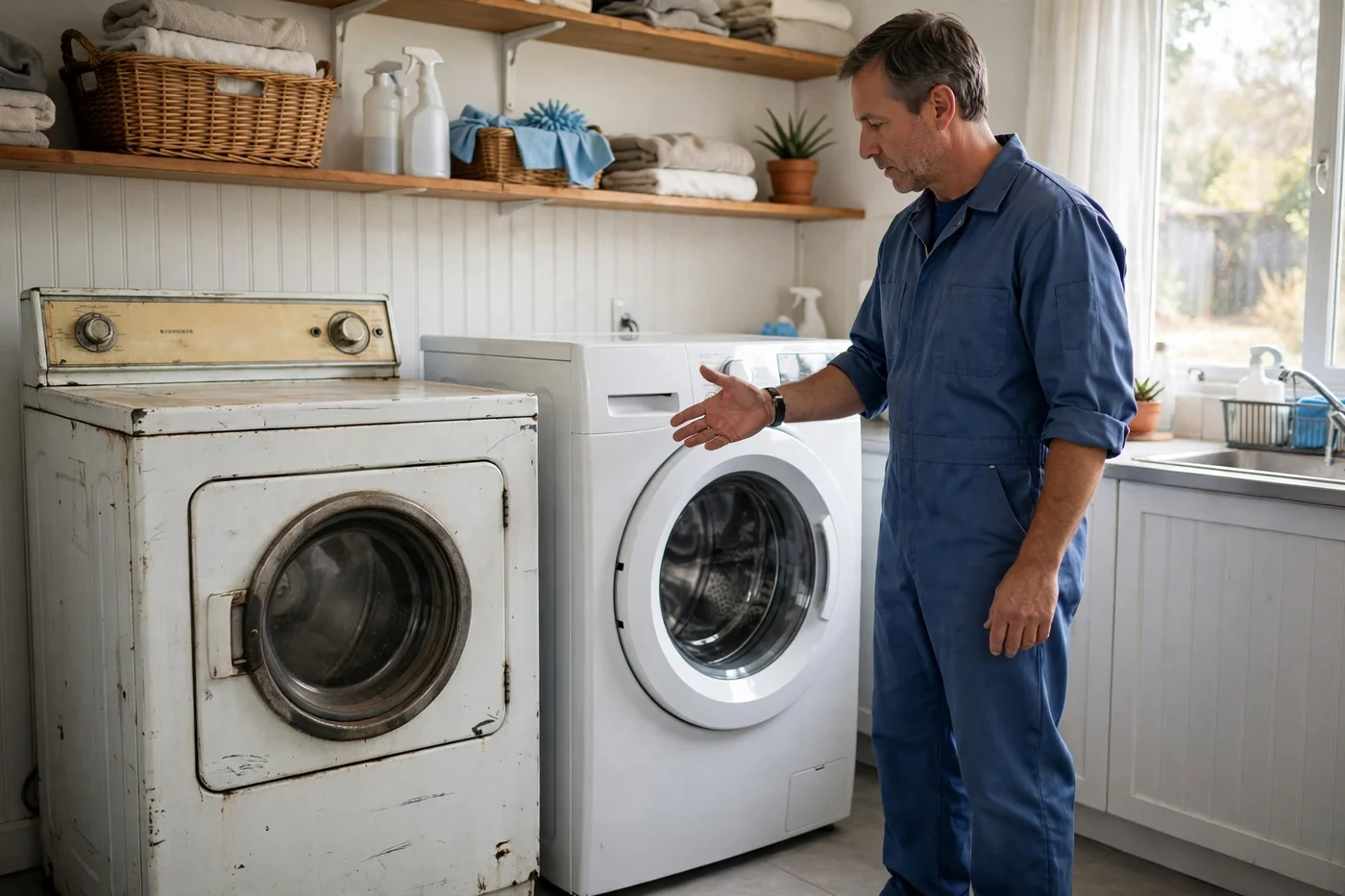
Start with the 50% rule: if the repair costs more than half the price of a comparable new machine, replacement usually wins. Then weigh the machine’s age, washers run roughly 10 to 13 years and dryers roughly 13, how often it has broken down lately, and whether the repair fixes the real problem or just buys time. And here’s our promise up front: if the math says replace, we’ll say so. We’d rather give you an honest answer than sell you a repair that won’t last.
The 50% rule, explained
The 50% rule is the industry’s simplest decision tool. Get a firm quote for the repair, then compare it to the price of a comparable new machine (not a bare-bones model, not the luxury tier, a comparable one):
- Repair well under 50%: repair almost always wins, especially on a younger machine.
- Repair around 50%: look at age and breakdown history. A young, reliable machine gets repaired; an old, needy one gets replaced.
- Repair over 50%: replacement usually wins. You’re spending new-machine money without getting a new machine’s remaining life.
Our washer and dryer repair cost guide lays out typical national repair ranges so you can run this math before anyone visits. We always give you a firm, upfront quote after diagnosis, before any work starts, so the 50% calculation uses your real number, not a guess.
Age guidelines, and when to ignore them
| Machine age | What it usually means |
|---|---|
| Under 5 years | Repair almost anything; the machine has most of its life ahead of it |
| 5 to 8 years | Repair small and medium jobs; question major ones |
| 8 to 12 years | Repair only cheap, high-confidence fixes; price the replacement option |
| Over 12 years | Replacement is usually the smart money unless the repair is tiny |
When to ignore the table: a 10-year-old machine that has needed nothing but a lid switch is a better bet than a 6-year-old machine that has needed three repairs in two years. Breakdown history beats the calendar. We see this pattern in newer subdivisions around Sango too: a young machine that keeps failing is often a lemon, and the honest advice is to stop feeding it.
When repair is the smart money
- The repair is a common, high-confidence fix: drain pump, lid switch, belt, thermostat, heating element
- The machine is under about 8 years old and has been reliable
- The quote is comfortably under half the price of a comparable new machine
- You’d have to remodel the laundry room to fit a new machine (older homes sometimes have this problem)
- The “problem” turns out to be installation or maintenance: leveling, a kinked hose, a clogged vent
That last point is worth money on its own. A meaningful share of our service calls end with an adjustment or a cleaning rather than a part, which is why diagnosis comes before any repair quote.
When replacement wins
- The repair crosses the 50% line on a machine past its typical life range
- Multiple breakdowns in the last year or two; the machine is telling you its systems are failing in sequence
- A major repair on an older machine: transmission, tub, or front-load bearings
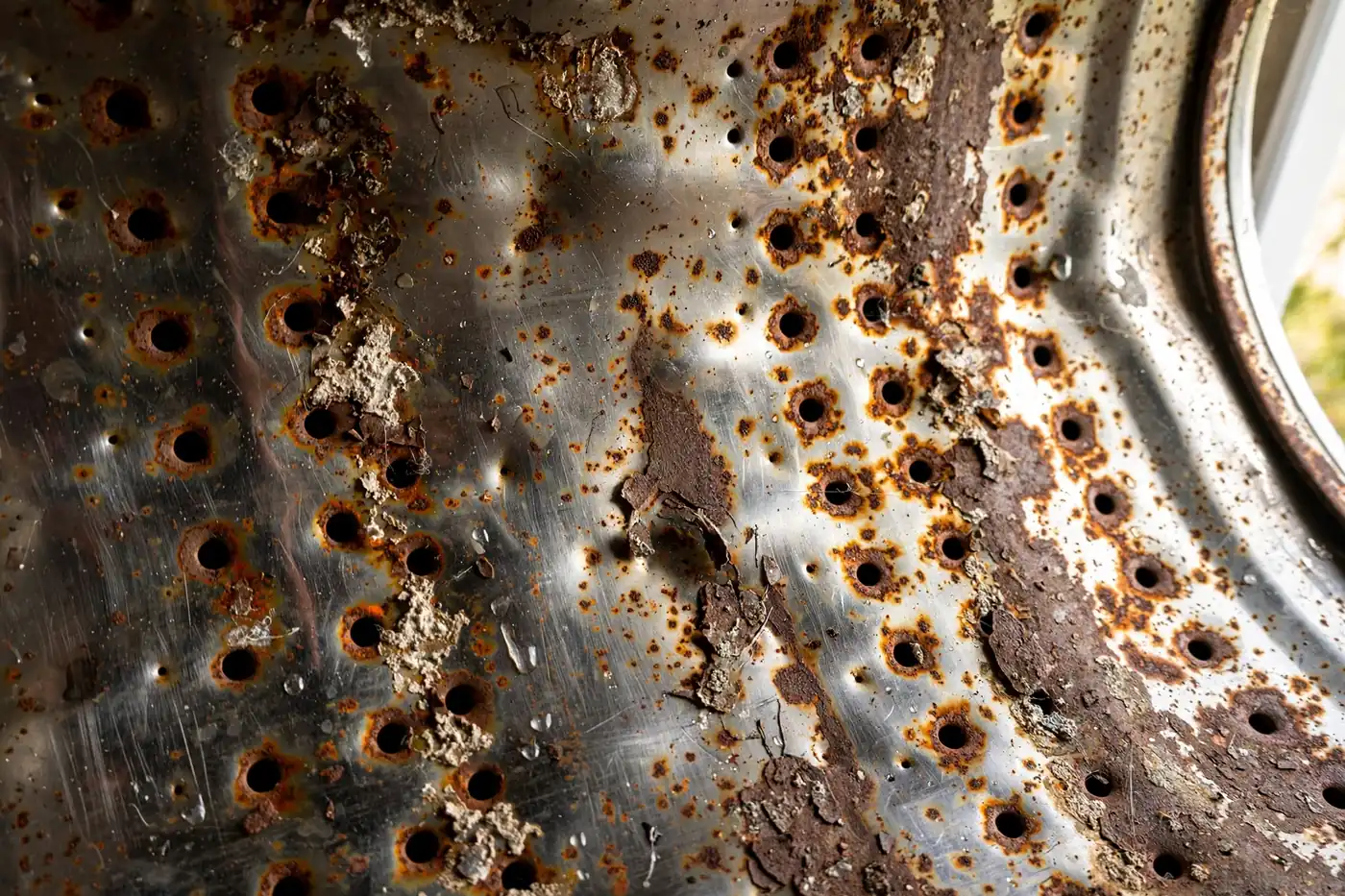
- Rust or corrosion inside the tub or on structural parts; that damage doesn’t get better
- The machine can’t do what you need anymore: too small for the household, can’t be stacked, parts getting hard to find
What we tell customers who ask us directly
We get asked “is it worth fixing?” on nearly every call, so here’s our honest framework. If your machine is reasonably young, the repair is routine, and it’s been reliable, we’ll fix it and tell you it should run for years. If the repair is big, the machine is old, and something else is already showing wear, we’ll tell you to put the money toward a new one. We offer washer and dryer installation in Clarksville too, so we’re not steering you away from us; we’re steering you toward the better deal. A repair company that tells you “don’t spend the money” is one you can trust when it says “yes, fix this one.”
Related reading
- Washer and dryer repair cost guide for Clarksville, TN · typical national ranges explained
- Washer and dryer installation in Clarksville · when you do replace
- How often should you service your washer and dryer? · maintenance that pushes replacement further out
What is the 50% rule for appliance repair?
If the repair costs more than half the price of a comparable new machine, replacement usually makes more financial sense. Below half, repair usually wins. It's a rule of thumb, not a law: a cheap repair on a young machine is almost always worth it, and an expensive repair on an old one rarely is.
How long do washers and dryers typically last?
Industry rules of thumb put washers around 10 to 13 years and dryers around 13 years of typical service, though well-maintained machines can run longer. A machine that's been reliable for 9 years and needs its first repair is a very different decision from a 9-year-old machine that's needed three repairs in two years.
Is it worth fixing a 10-year-old washing machine?
Sometimes. If the repair is small, a lid switch, a drain pump, a belt, and the machine has been reliable otherwise, fixing it can buy you several more years cheaply. If it's the third repair in a short stretch, or the repair is a major one like a transmission or bearings, that money usually buys more life in a new machine.
Should I replace both machines if only one breaks?
Not automatically. Replace both if they're both old and the other is showing the same wear, or if you want a matched set for stacking or rebates. If the other machine runs fine and is reasonably young, repair the broken one and keep your money.
Will a new washer or dryer really save energy?
A new machine can be more efficient than a 15-year-old one, especially washers, but efficiency alone rarely pays for a replacement quickly. Treat it as a tiebreaker when the math is already close, not as the main reason to replace a machine that repairs cheaply. ENERGY STAR's certified clothes washer listings are a good place to compare models.