Washer Troubleshooting
Washer Making a Loud Banging Noise? Here’s Why

Banging during the spin cycle usually means the load shifted to one side and the drum is swinging against the cabinet. That’s the simple version. If it happens on every load no matter how you arrange the clothes, the real problem is often worn suspension rods or shock absorbers. And if the machine is brand new and shakes like it wants to leave the room, check the shipping bolts, because a surprising number of new installs still have them in.
What the different sounds mean
Washers talk. Here’s how to read what yours is saying:
| Sound | When you hear it | What it usually means |
|---|---|---|
| Thumping or banging | Spin cycle | Unbalanced load, or worn suspension letting the drum swing too far |
| Rhythmic knocking | Spin, same beat every time | Something between the drum and cabinet, or a loose drum support |
| Grinding | All through the cycle | Drive system: belt, motor coupling, or bearings wearing out |
| High-pitched squeal | Spin or agitation | Belt slipping, or a bearing on its way out |
| Rattling | Anytime | Loose change or a bra wire in the pump area, or a loose panel |
Banging is a movement problem. Grinding and squealing are wear problems. That distinction decides whether you rebalance a load or call a technician.
The unbalanced-load test
Before anything else, rule out the load. Pause the machine, open it up, and redistribute the clothes evenly around the drum. Single heavy items, a lone bath mat, or a bundle of jeans on one side will throw any washer off balance. Then run a spin-only cycle. If the banging is gone, you just had a bad load, and it happens to everyone.
We see this a lot in busy family households around Rossview where washers run back-to-back: the answer is rarely a broken machine, just a load that needed rearranging. If the noise comes back on the next full load, keep reading.
Shipping bolts left in: the new-washer banger
Every new front-loader, and some top-loaders, ship with transit or shipping bolts that lock the drum in place so it survives the trip. They’re supposed to come out during installation. When they don’t, the drum can’t float on its suspension, and the machine shakes violently from the first spin. Check your installation manual: it shows exactly where the bolts are (usually the back panel) and which wrench removes them. If you’re not comfortable doing it, call us or the installer. Don’t keep running the machine until they’re out.
Worn suspension rods and shock absorbers
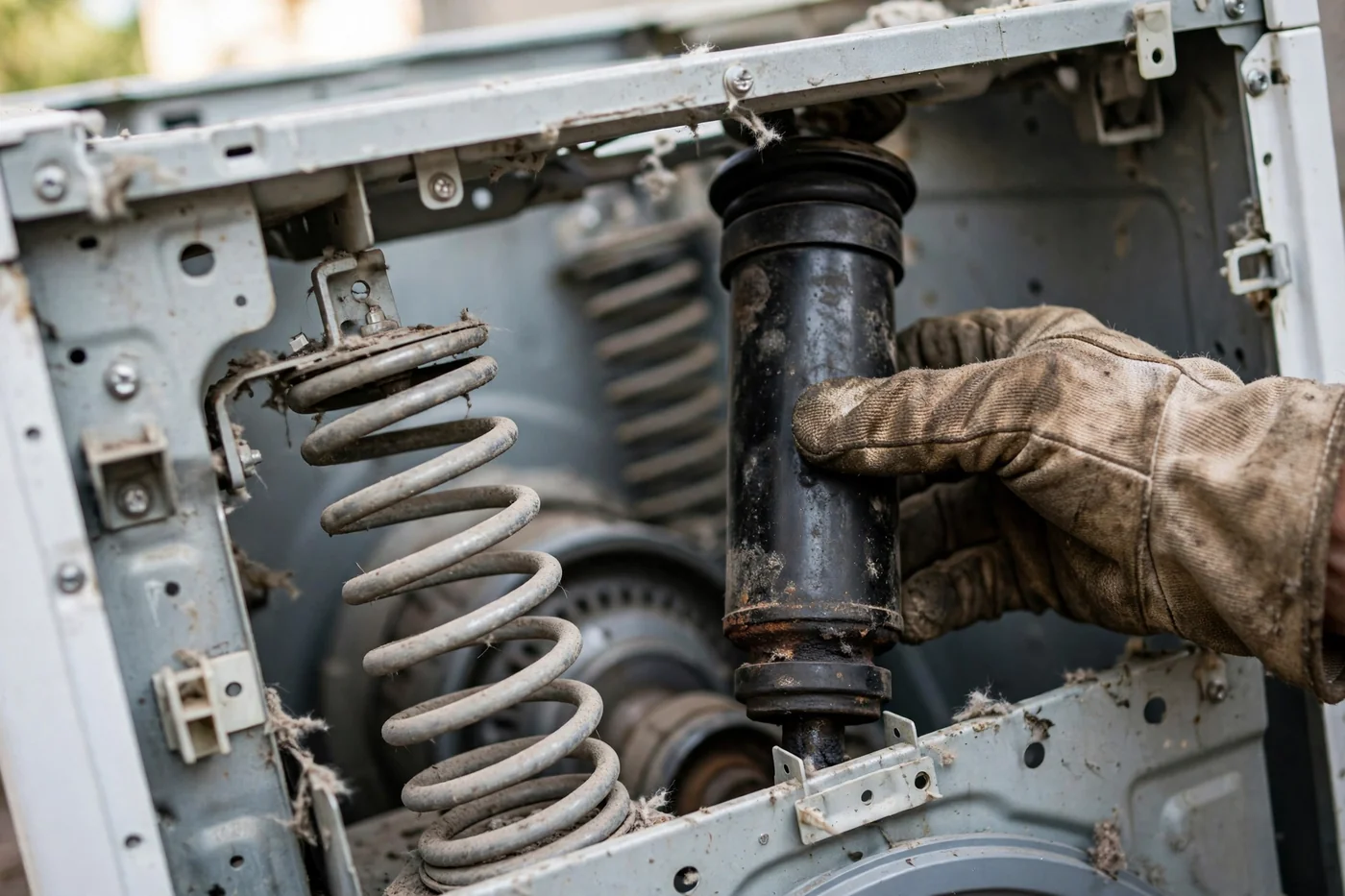
This is the most common mechanical cause of persistent banging in machines more than a few years old. The tub hangs on suspension rods (top-loaders) or sits on shock absorbers (front-loaders), and they dampen the drum’s movement during spin. When they wear out, the drum swings farther than it should and knocks against the cabinet.
Clues that point to suspension rather than balance:
- It bangs on every load, even small, evenly arranged ones
- The tub feels loose or wobbly when you push it by hand with the machine off
- The machine has started “walking” across the floor, even on level ground
- The banging has been getting gradually worse over months
Replacing suspension rods or shocks is a straightforward technician job, and it’s one of the repairs that makes an older washer feel new again. This is also a good time to have the machine leveled properly, since an unlevel machine bangs for a completely different, very fixable reason.
When banging means stop using it
Stop the machine and call us at (931) 208-9792 if the washer is walking across the floor, the drum visibly strikes the cabinet, the shaking started suddenly and violently, or the noise arrived together with a leak or a burning smell. Running a machine that’s hammering itself can crack the tub, snap a suspension rod, or damage the drive system, turning a moderate repair into a machine-ending one. That’s a repair-vs-replace decision you don’t want to make the expensive way; our repair-or-replace guide walks through the math.
Related reading
- Washer not spinning in Clarksville? Belt and motor repair
- Washer repair service in Clarksville, TN · same-day diagnosis for noise and vibration
- How often should you service your washer and dryer?
Why does my washer bang during the spin cycle?
Banging during spin usually means the load shifted to one side and the drum is swinging against the cabinet. Redistribute the clothes and run a spin-only cycle. If it bangs on every load no matter how you arrange it, the suspension rods, shock absorbers, or drum support are likely worn.
Is it normal for a new washer to shake and bang?
No. New washers ship with transit bolts holding the drum in place, and they must be removed during installation. If they weren't, the drum can't move freely and the machine will shake violently. Check your installation manual and have the bolts removed before using the machine again.
Can an unbalanced load damage my washer?
Yes, over time. An occasional off-balance load is normal, but repeated violent shaking wears out suspension rods, shocks, and drum bearings faster. If your washer regularly walks across the floor, it's not just annoying; it's wearing itself out.
What's the difference between banging and grinding in a washer?
Banging or thumping during spin points to balance or suspension: the drum is moving around. Grinding or squealing, especially constant through the cycle, points to the drive system: the belt, motor coupling, or bearings. Grinding is the more serious of the two and deserves a technician sooner.
When should I stop using a noisy washer and call for repair?
Stop the machine and call us if it walks across the floor, the drum visibly hits the cabinet, the shaking is getting worse every load, or the noise came with a leak or a burning smell. Continued use can turn a suspension job into a much bigger repair.